
The Complete Guide to Office Lighting: Choosing Fixtures to Create the Right Workplace Atmosphere
Good lighting is essential to creating a productive, comfortable workplace. Effective office lighting design not only reduces eye strain and improves concentration, but also reinforces your corporate identity and creates a distinctive atmosphere through coordinated fixtures and furnishings. From color temperature and lumens to fixture types, installation heights, and interior styling, this article explains how to select the most suitable lighting for your office.
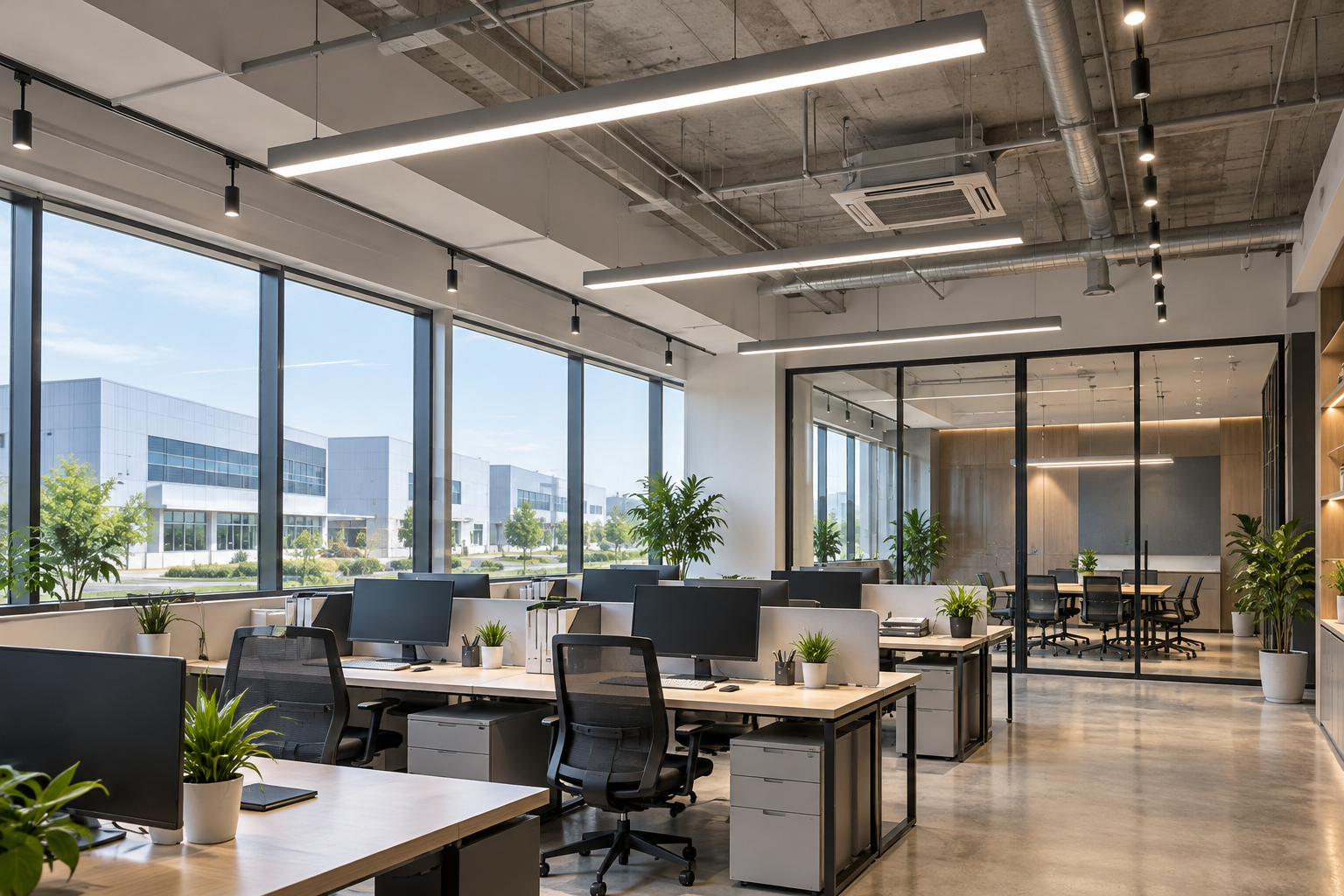
Good lighting is essential to creating a productive, comfortable workplace. Effective office lighting design not only reduces eye strain and improves concentration, but also reinforces your corporate identity and creates a distinctive atmosphere through coordinated fixtures and furnishings. From color temperature and lumens to fixture types, installation heights, and interior styling, this article explains how to select the most suitable lighting for your office.
1. Understanding Color Temperature: Where to Use Cool White, Warm White, and Neutral White Light
The color temperature of light (expressed in K) directly affects circadian rhythms and psychological responses. Assigning suitable color temperatures to different areas is the first step toward creating the right office atmosphere.
| Light Type | Color Temperature Range (K) | Atmosphere | Recommended Areas |
|---|---|---|---|
| White Light (Cool White) | 5000K – 6500K | Alert, bright, and precise | Drafting areas, precision work areas, laboratories, archive rooms |
| Natural-Tone Light (Neutral White) | 3500K – 4500K | Natural and comfortable, supporting focus with less fatigue | Open-plan offices, meeting rooms, executive offices |
| Yellow-Tone Light (Warm White) | 2700K – 3000K | Warm, relaxing, welcoming, and stress-free | Office pantries, breakout areas, staff cafeterias, client meeting rooms |
1. Neutral White Light (Around 4000K): The Best Choice for Open-Plan Offices
Neutral white light has a color temperature closest to early morning light, providing visual comfort while maintaining moderate alertness and concentration. It is particularly suitable for open-plan workspaces where employees spend extended periods at computers.
2. Cool White Light (5000K–6500K): Areas Requiring High Concentration
High-color-temperature cool white light can suppress melatonin production, helping people stay focused. It suits areas requiring precision work or where drowsiness is a concern, but extensive use throughout the office should be avoided, as it can cause visual strain.
3. Warm White Light (2700K–3000K): Social Spaces for Relaxation and Reflection
Warm white light can help people feel more at ease and less tense. Using it in office pantries or informal brainstorming areas encourages employees to interact and relax.
2. Popular Office Lighting Fixtures and Key Features
Office lighting comes in many forms, with panel lights and recessed downlights among the most common. Glare control deserves particular attention.
1. LED Panel Lights
- Features: Uniform light distribution, slim profiles, and large light-emitting surfaces.
- Applications: Open-plan offices and areas with suspended grid ceilings.
- Advantages: Provide broad, consistent ambient illumination while effectively reducing shadows.
2. Recessed Downlights
- Features: Integrated into the ceiling for a clean, streamlined appearance.
- Applications: Corridors, wall washing, meeting room accent lighting, and executive offices.
- Advantages: Provide supplementary lighting or create atmosphere, adding visual depth to the space.
3. Glare Control (UGR < 19)
Office work typically involves extended screen time, and glare (Direct Glare & Reflective Glare) is a major cause of eye strain and headaches.
- Choose fixtures with a Micro-prismatic Diffuser or a deep-recessed anti-glare design.
- Ensure the Unified Glare Rating (UGR) is below 19 to meet international standards for comfortable office lighting.
3. Planning for Lumens, Illuminance, and Ceiling Height
When selecting fixtures, look beyond wattage (W). Focus on lumens (Lumen) and the resulting illuminance (Lux), and plan the layout according to ceiling height.
Lighting Standards Reference: Recommended illuminance for typical office desktops is 500 – 750 Lux; approximately 150 – 300 Lux is sufficient for corridors and break areas.
1. Calculating Lumens (Luminous Flux)
Lumens measure the total amount of light emitted by a source. To achieve a desktop illuminance of 500 Lux, multiply the floor area by the required illuminance and account for the lighting utilization factor (typically around 0.6–0.7).
2. How Ceiling Height Affects Fixture Layout
- Standard Height (2.6 meters – 2.8 meters): Wide-angle diffused panel lights or surface-mounted panel lights are suitable, ensuring evenly overlapping light distribution without noticeable dark spots.
- High Clear Height Spaces (3 meters or Higher, or Double-Height Ceilings): With higher ceilings, light intensity falls more significantly before reaching the work surface. Choose high-lumen fixtures or deep-recessed downlights, or use suspended linear lights positioned approximately 1.8 – 2.2 meters above the desktop to maintain adequate illuminance.
4. Coordinating Lighting with Office Furnishings and Decor
Lighting fixtures do more than illuminate a space; they are an integral part of the overall interior styling.
1. Modern High-Tech / Minimalist Style
- Interior Elements: Metal trim, gray carpeting, glass partitions, and white lacquered desks.
- Lighting Choices: Combine 4000K neutral white light with frameless panel lights or minimalist black linear fixtures to emphasize a clean, contemporary look.
2. Natural Wood / Cozy Scandinavian Style
- Interior Elements: Wood-grain desks, fabric sofas, and greenery (living walls).
- Lighting Choices: Use 3500K–4000K neutral white light for ambient illumination, complemented by 3000K warm white downlights or decorative pendants in focal areas to highlight the warmth and texture of wood.
3. Industrial / Maker-Space Style
- Interior Elements: Exposed-service ceilings, concrete walls, and vintage leather chairs.
- Lighting Choices: Combine track-mounted downlights with black anti-glare linear fixtures, retaining some darker areas to create visual depth and an atmosphere of creative energy.
Conclusion and Lighting Recommendations
There is no single formula for creating the right office atmosphere. It requires a balanced approach to zoned color temperatures, adequate lumen output, and glare control. When planning your design:
- Choose efficient, glare-controlled neutral white panel lights for open-plan areas;
- Use warm white downlights and stylish pendant fixtures in breakout and client meeting areas;
- Adapt installation methods to the ceiling height and coordinate lighting with the colors of your furnishings and decor.
Comprehensive lighting planning can improve workplace productivity while creating a healthier, more enjoyable office environment.
This article provides general information only. Regulations, permits and lease terms should be confirmed case by case with qualified building, fire safety or legal professionals.
See the Park in Person
Book a Visit to Alliance A-Park Green Smart Park
Our team will guide your tour and help assess the right space for your operations.