
The Complete Factory Registration Process: Application Steps and Key Considerations
Factory Registration involves more than preparing and submitting documents. It also depends on land use, building use, production processes, equipment, and environmental and fire safety requirements. This article outlines the complete process, from site assessment and document preparation to review and approval, highlighting pre-lease checks, supplementary submissions, and ongoing compliance to help businesses reduce factory setup risks.
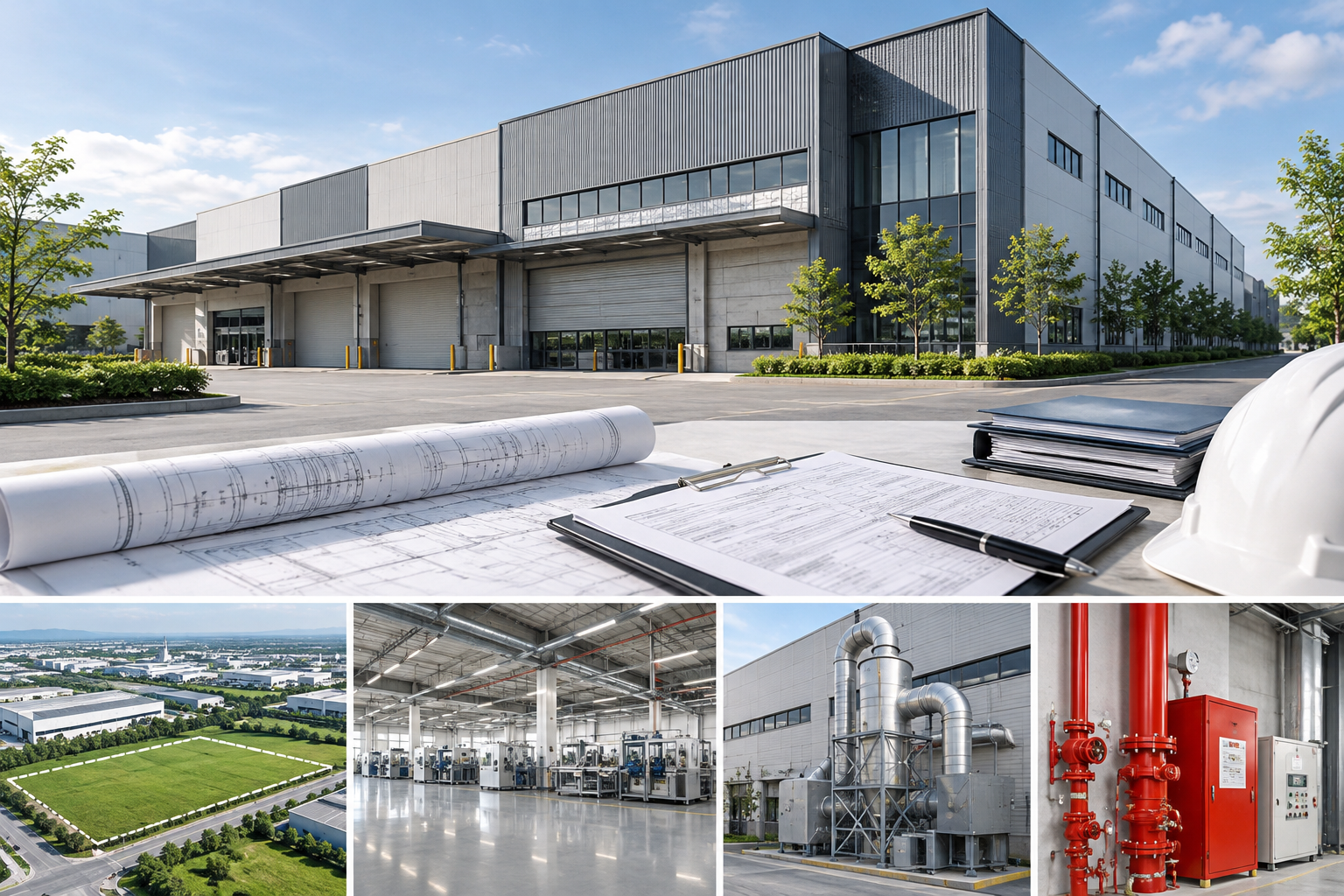
When planning to establish, relocate, or lease a factory, businesses often view Factory Registration as the final step before moving in. In practice, whether registration is achievable is often determined during site selection and production planning. When assessing factories in Taichung Industrial Park and surrounding areas, for example, businesses must consider not only rent, area in ping, and transport access, but also whether the land, buildings, and production activities are compatible. The following overview of the general application process and key considerations provides a framework for due diligence. Actual requirements remain subject to the local competent authority and the circumstances of each case.
1. Determine Whether Factory Registration Is Required
Not every company, warehouse, or studio requires Factory Registration, and this cannot be determined solely by a company name or registered business activities. Whether a facility is required to register must be assessed based on its actual manufacturing and processing activities, the scale of its premises and equipment, and the applicable classification criteria.
Prepare the following information before consulting the local authority responsible for Factory Registration:
- Products and processes: What products will be manufactured, and what processing, assembly, or treatment procedures are involved.
- Equipment layout: Machinery types, quantities, power requirements, and proposed locations.
- Space usage: The scope and area of production, storage, office, and ancillary facilities.
- Special conditions: Whether operations use chemicals or generate wastewater, air pollution, noise, or industrial waste.
Company or business registration and Factory Registration are separate systems. Completing company registration does not mean manufacturing is legally permitted at the registered address. Even facilities below the threshold for Factory Registration are not exempt from land use, building, fire safety, or environmental requirements.
2. Verify Land and Building Compliance Before Leasing or Purchasing
Site selection should assess both what activities the land permits and how the building is approved to be used. A location within an industrial park does not mean every industry is eligible to operate there. Likewise, a building that looks like a factory does not necessarily have approval for production throughout its entire space.
Land and Industrial Park Requirements
Confirm the land use zoning, land classification, and permitted uses, and check for industry restrictions, tenant admission reviews, or other park management requirements. Management arrangements and application contacts may differ between parks, so identify the receiving authority in advance.
Building and Leased Premises
Review the occupancy permit, approved drawings, and available building title records, and compare them with the current use, floors, partitions, and area.
For leased properties, also confirm that the landlord has the legal authority to lease the premises and that the lease, actual occupied space, and application address are consistent. Where subleasing or shared facilities are involved, clarify the boundaries of independently occupied space and the allocation of management responsibilities.
3. Identify Prerequisite Approvals and Prepare Application Documents
Once site feasibility is confirmed, plan the required building, fire safety, environmental, and other procedures according to the production process. These procedures do not necessarily all need to be completed sequentially, but requirements for prior approval must be checked before equipment installation or production begins.
For example, certain pollution-generating facilities may require an installation permit in advance and a separate operating permit before use. Wastewater discharge, fire safety equipment, hazardous materials, and specific industries may also be subject to additional requirements. Not every factory is subject to the same requirements; each case should be assessed based on its raw materials, equipment, and production processes.
Common documents prepared for Factory Registration include:
- The application form and basic factory information.
- Company or business registration documents and information on the responsible person.
- Evidence of lawful land and building use.
- The lease agreement, consent to use the premises, or other evidence of the right to use the property.
- Factory layout drawings, machinery and equipment layouts, and relevant floor area information.
- Information on products, raw materials, manufacturing processes, and equipment.
- Permits, approvals, or other supporting documents required for the specific case.
This is a preparation guide, not a fixed checklist for every application. Some information may be obtained directly by the authority. Refer to the latest application forms and notices issued by the receiving authority. Before submission, carefully cross-check addresses, land parcel numbers, building identification numbers, names, and areas to avoid inconsistencies between documents.
4. Submission, Corrections, and Approval
For a typical application, track progress through the following stages: identify the receiving authority → prepare and submit documents → document review → corrections or on-site inspection → registration approval. Any prerequisite approvals must also be incorporated into the schedule.
- Confirm the application contact: Depending on the location and type of industrial park, confirm submission methods, forms, and fees with the local government or relevant management authority.
- Submit the application: Submit through the designated channel and retain the submission receipt and a complete copy of the application package.
- Cooperate with the document review: The authority reviews the application and supporting documents and, where necessary, clarifies matters falling under other authorities' responsibilities.
- Provide corrections or facilitate inspections: Submit any missing or corrected information by the notified deadline. If an on-site inspection is arranged, ensure that the actual layout and use match the application.
- Verify the approval details: Check the factory name, address, industry classification, and other registered particulars, and retain the approval documents securely.
Review timelines depend on application completeness, site conditions, and prerequisite procedures. An estimated approval date should not be treated as a guaranteed completion date. A submission receipt or request for corrections does not mean registration is complete. Factories legally required to register should begin manufacturing or processing only after approval and fulfillment of all other statutory requirements.
5. Common Risks and Post-Registration Responsibilities
Assuming a Previous Registration Qualifies a New Tenant
A previous tenant's Factory Registration is only a reference for due diligence; it cannot simply be reused. Changes to the operating entity, production processes, equipment, or occupied space may require a new application or other applicable procedures.
Treating Specific Factory Registration as a Standard Route to Establishing a Factory
Specific Factory Registration is a dedicated regulatory framework for existing unregistered factories, with eligibility criteria and restrictions. It is not a shortcut for retrospectively legalizing newly established noncompliant factories, nor does it mean all land and building issues have been resolved.
Overlooking Changes and Ongoing Compliance After Approval
After registration, confirm the applicable procedures before relocating, expanding the occupied space, changing the industry classification, or amending other registered particulars. Business closure must also be handled in accordance with the law. Obligations relating to fire safety equipment maintenance, building public safety, environmental permits, and occupational safety remain subject to ongoing management under the applicable regulations.
Conclusion
The purpose of Factory Registration is to ensure consistency between the site, buildings, production processes, and application information—not simply to obtain an approval document. Alliance Holding Group Co., Ltd recommends that businesses evaluating factory locations such as Taichung Industrial Park or Alliance A-Park first provide their product, process, and equipment requirements, then verify each applicable condition. Questions involving regulatory interpretation or facility improvements should be confirmed with the competent authorities and qualified building, fire safety, and environmental professionals. Incorporating necessary approvals into the lease and move-in plan can help reduce investment and operational risks.
This article provides general information only. Regulations, permits and lease terms should be confirmed case by case with qualified building, fire safety or legal professionals.
See the Park in Person
Book a Visit to Alliance A-Park Green Smart Park
Our team will guide your tour and help assess the right space for your operations.